Deep Thoughts about Identity from George MacDonald
Encouraging thoughts about identity from George MacDonald, the nineteenth-century Scottish novelist and theologian who is best known for inspiring C.S. Lewis.
Have you ever wondered what it means to “be a unicorn in a field of horses”? This is a slogan that I’ve seen recently on everything from socks for little girls to throw pillows. I think it means to know yourself and be true to yourself, be beautiful, be bold, don’t conform to those around you or allow yourself to be pressed into a mold. Be authentic and express your true self. Don’t be afraid to be different. I love this image of a gorgeous silver unicorn with rainbow hair in a grassy meadow full of graceful brown horses.
On most days, however, I don’t feel like a unicorn. On an average day, I would be happy to be a graceful brown horse. It can be hard to know what your authentic self looks like, right? What if your authentic self doesn’t feel like a mythical creature? What if you never do anything magical? What about those times when you experience a tension between expressing your own desires and doing what is best for those you love? As Olaf puts it so poignantly in Frozen, “Love is . . . putting someone else’s needs before your own.” And, “some people are worth melting for.”
Because I love to ponder things like unicorns and Disney movies, these words about identity jumped out at me when I stumbled on them in C.S. Lewis’s anthology of readings from George MacDonald. In this amazing passage, George MacDonald meditates on Jesus’s encouraging words to a group of persecuted Christians in Revelations 2:17: “To the one who conquers . . . I will give him a white stone, with a new name written on the stone that no one knows except the one who receives it.”
“The giving of the white stone with the new name is the communication of what God thinks about the man to the man. . . . The true name is one which expresses the character, the nature, the meaning of the person who bears it. It is the man’s own symbol—his soul’s picture, in a word—the sign which belongs to him and to no one else. Who can give a man this, his own name? God alone. For no one but God sees what the man is. . . It is only when the man has become his name that God gives him the stone with the name upon it, for then first can he understand what his name signifies.”
George MacDonald, Unspoken Sermons
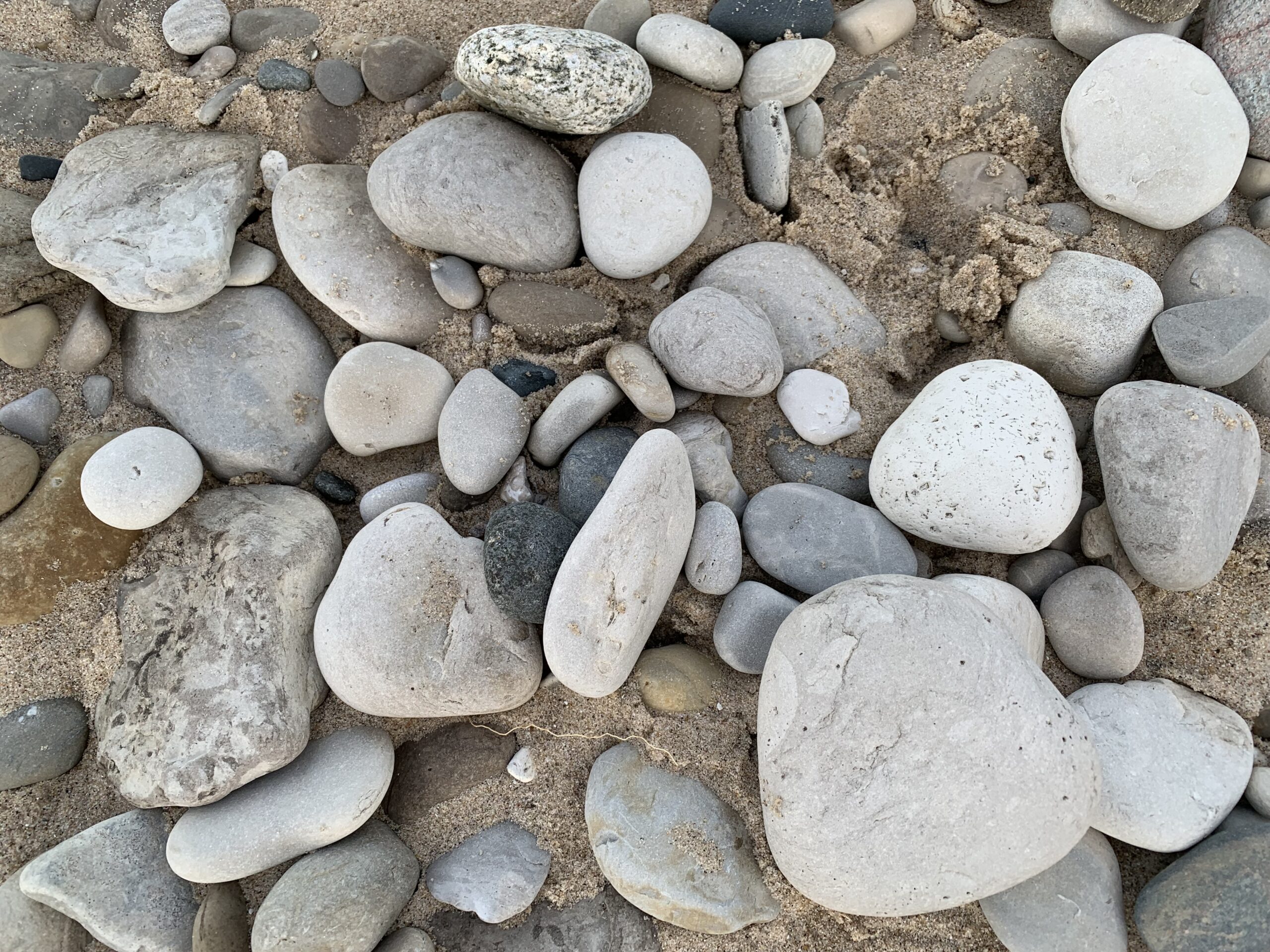
At first glance, the white stone from God seems like an odd gift, but giving white stones was a familiar custom for the original readers of the New Testament. In the ancient world, simple white pebbles had a number of different uses. In Greece, judges used white pebbles to indicate innocence at a trial. At the end of the trial, the judges on a panel would drop a white stone in an urn if they thought the defendant was innocent and a black stone if they thought he was guilty.
White stones were also given to the winners at the Olympic Games. The stones gave athletes special privileges such as free entrance to public entertainments. Friends sometimes also gave each other white stones as a token of friendship or hospitality. And white stones inscribed with the bearer’s names were used as tickets to huge banquets. The British Museum actually has examples of these tesserae, which gave the bearer admission to the theatre of Dionysus in Athens (source). This passage draws on all of these meanings.
My favorite part of this quote is the intimacy of this interaction between God and these persecuted Christians. Each person receives a stone that is uniquely theirs and has a secret name inscribed on it that only God and that person know.
Not only is this white pebble a symbol of victory and exoneration and a ticket to the most wonderful banquet imaginable, it is also the sign of intimate friendship with God. We may not ever feel like a unicorn or ever do anything magical, but God has a secret name for us, our soul’s picture, a name that expresses the meaning of who we are.
If you are like me, and you’ve ever wrestled with comparison, if you’ve ever wished you had been born with a different personality or a different set of gifts, if you’ve ever struggled to reconcile your desires with the circumstances of your life, this is such good, freeing news. Tuck this idea of the little white pebble with your secret name in the pocket of your mind to remind you that God knows you. He knows your meaning and your soul’s picture. There’s a secret name for you that belongs to no one else.
Macdonald has so many wonderful deep thoughts about identity, and I will share some of them in my next posts.