End of the homeschool year reflections 2020-2021 and a few favorite resources
It’s the beginning of June, and we are setting our school books aside for a few months to enjoy a break from our regular routine. I’m looking forward to some slow mornings, working on my garden, taking the kids to the pool, and cleaning out a few cupboards and closets. It’s refreshing to clear my head of school for a few weeks, but first, I want to share a few end-of-the-year reflections.
How do you evaluate your homeschool year?
We certainly didn’t finish all of our school books this year. There were moments when we struggled more than we needed to because of my lack of organization and communication or unrealistic expectations. There were days with tears over math, small children who developed an uncanny ability to run away to play the moment I got distracted, afternoons with breakfast dishes on the counter, mornings when the most significant thing I accomplished was to drink a lot of coffee—all the normal messes and frustrations that arise when school and home and family get stirred together like vegetable soup.
On the other hand, we also read so many books and did so many things that weren’t part of my original plan. There were many moments of providential learning serendipity, cozy togetherness, and quiet diligence. It is a joy to watch my children grow beyond what I could ever orchestrate.
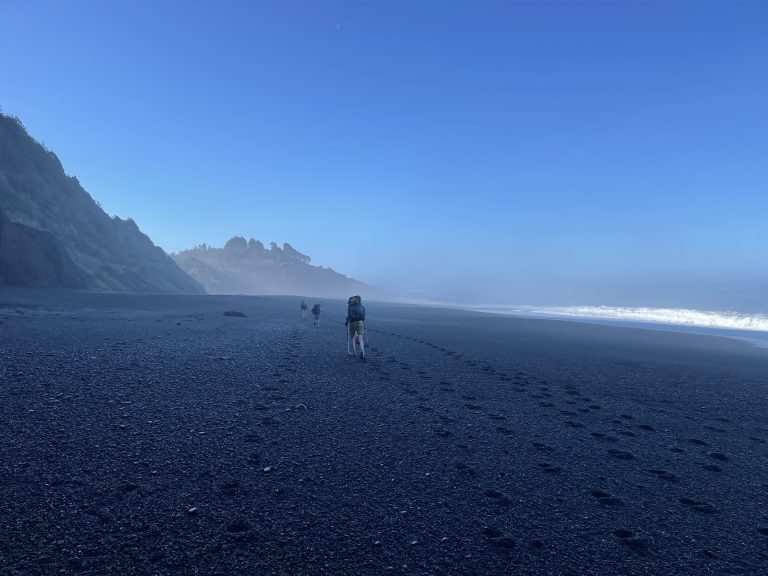
Tiny indications that what we are doing is sticking emerge in surprising and hilarious ways—like when I heard my second grader reciting “The Road Not Taken” while playing hopscotch in the driveway or when we were backpacking this weekend and as we walked into the shelter area, my kindergartener started reciting the passage from Midsummer Night’s Dream that begins, “I know a bank where the wild thyme blows” and continues, “There sleeps Titania sometime of the night.”
The Rule of Six
Last August, I listened to a talk by Sarah Mackenzie about the “Rule of Six”—this is a list of six things that are most important to you to do each day and help you to focus on your vision for your family’s homeschool. I relied pretty heavily on Sarah’s list when I made my own. Revisiting it at the end of the year, I find that I still like this list.
- Read aloud and read alone.
- Talk about meaningful things or connect and do something together.
- Go outside.
- Practice violin.
- Nurture faith.
- Create something.
Somewhere along the year, I mentally added a seventh rule: “Do some math.” We accomplished most of these things most days, although “create something” was not usually something I had planned—often it was legos or free drawing. My hope is that homeschooling gives my kids extra margin in their days for these creative pursuits.
Testing and other objective measures
To help track my children’s progress from year to year and decide what to tweak in our homeschool for the future, I administer standardized tests in the spring. (Either a standardized test or an evaluation with a certified teacher is required for homeschoolers in the state of Ohio.) We use the Stanford-10 test because it was recommended to me by a friend at the start of our homeschool journey. The test incorporates listening, social studies, and sciences, along with language arts and math, and the final results are broken down by skills, so that you can see, for instance, if your student is really strong in vocabulary but needs extra work in spelling. A standardized test is just one snapshot of your child’s abilities and knowledge on a particular day, but an annual evaluation does help me feel like I’ve wrapped up the year.
Portfolios and other celebrations
At the end of the year, I also gather representative samples of their schoolwork and art in binders. One goal that I’ve had every year and have yet to accomplish is to print out the photos on my phone and make a scrapbook of our year.
I’m learning how much children love being able to look back on the things they learned and made. Our writing teacher put together a portfolio for each student, and my girls loved looking back at their papers and realizing just how much writing they did over the year. These portfolios give them a sense of pride and accomplishment, an opportunity to share what they have learned, and an enjoyable way to review. Portfolios, notebooks, and other cumulative projects like timelines and lap books are something I’d like to incorporate more in the future.
This year, I’ve seen pictures of kids next to the stack of books that they read over the year. What a cool idea! A lot of our books have gotten returned to the library, but this would have been a fun idea for my second-grader, who really blossomed in his independent reading this year and discovered a few chapter book series that he loved.
A simple question: What was your favorite thing that we did this year?
I also like to ask the kids about their favorite thing that we did for school that year. This simple question is a helpful reality check that balances out my sometimes overly ambitious school plans.
At the end of our first year of homeschooling in 2018-2019, everyone’s favorite thing was our trip to Zoombezi Bay, a water park in Columbus. Zoombezi Bay hosts science days at the end of May and offers discounted tickets to homeschoolers and school groups. It’s a great way to count a day of sun and water slides as a day of school.
My kids’ favorite homeschool memory was a good reminder to me that—after all my obsessive curriculum research and planning—what my kids loved the most was just having fun. It was a good reminder that our family’s vision for homeschool is as much about building relationships and making memories together as it is about training young minds in academics. It was also reassuring to know that, even after a year of our homeschool experiment, my kids were still normal kids who loved having fun.
Our plans for the spring semester of our second year of homeschooling in 2019-2020 were altered by the Covid shutdown. In place of trips to the water park, the zoo, the science museum, and the homeschool convention, my kids spent long hours playing legos together on the dining room table. The highlights that my children remembered at the end of the school year were getting a puppy, doing daily written narrations, free reading, and playing.
This year, the kids listed World Watch (a daily news program for kids), writing class, reading, and simply doing school at home rather than going away to school as their favorite parts of the year.
A few favorite resources
1. Resources for a simple morning time. I love the idea of morning time and have always incorporated something like it in our day. Morning time is an opportunity for everyone to learn together and to gather those little pieces of faith, culture, and beauty that you want to share with your children, like picture study, composer study, folk songs and hymns, and memory work. Sometimes we’ve listened to The Daily Poem podcast or done science and Spanish together in morning time. With my oldest daughter doing more intense academic work this year, we put our morning time on a diet. What worked best for us was a paired-down morning time (about 20 minutes max) with a hymn and folk song (we often sang along with this talented homeschool mama on YouTube), memory work (either a Bible verse, catechism question, or poem—we didn’t do all of these every day), and World Watch.
World Watch is a ten-minute news show produced by World News Group targeted for kids ages 11-14, but all of my children ages 6-14 enjoyed streaming it each morning. I love that the stories are a good balance of national and international news, technology, science, and culture. In a year with a lot of controversial news, World Watch helped me discuss current events with my kids and offered civics lessons on topics like the Supreme Court justice confirmation procedure after the death of Ruth Bader Ginsburg, the election process, and the U.S. economy. Each episode includes some positive news like people helping others or funny animal stories, and each day ends with the Big Bash reminding watchers of this timeless wisdom from Proverbs, “Whatever the news, the purpose of the Lord will stand.”
My favorite sources of morning time inspiration are Pam Barnhill’s podcast, Your Morning Basket, especially the first episode with Cindy Rollins, and Cindy Rollins’ memoir, Mere Motherhood, which is one of the best books about homeschooling and motherhood ever.
2. Bedtime Math. Bedtime Math is a series of books with a short, funny story to read each night and three or four math problems for kids to do before bed. It is the most fun math supplement we have found. My sons are 6 and 8, and the problems are perfect for them.
3. Kiwi Crates. I read about Kiwi Crates on Kara Anderson’s encouraging blog and bought a three month subscription for each of my kids for Christmas. They loved them so much that I am continuing to renew the subscription. Each month, Kiwi sends a kit in the mail with a themed craft project including all of the supplies and a fun, kid-friendly comic book of instructions.
Kiwi Crates were my most successful attempt at strewing, a wonderful idea from unschooling where you simply offer activities to your children and let them choose how and when they would like to engage with the activity. Strewing can be so simple. It can be bringing home a stack of books from the library and setting them on the table, ordering a butterfly kit in the mail, pulling out craft supplies, or turning on a documentary and waiting to see who joins you on the couch.

4. Little-known central Ohio gems. Covid put a damper on our field trip opportunities this year, but friends introduced us to some parks that we didn’t know about before. Did you know that Columbus has a topiary park that recreates Georges Seurat’s A Sunday Afternoon on the Island of La Grand Jatte? You can be part of this beautiful pointillist painting!
One hour east of Columbus in Licking County is Flint Ridge Park, an ancient Native American flint quarry dating back at least 14,000 years and a quiet nature preserve. The quarry trail takes you past prehistoric quarries, which now look like big green bowls in the earth. There is flint everywhere in the park, especially in the roots of fallen trees and in the stream. Flint Ridge flint is multi-colored, white, purple, orange, and green, an Ohio treasure and a unique geological feature in our very own neighborhood.

The beautiful Ohio statehouse building in Columbus is not a secret, but, CHEO’s Capitol Day, held every year in October, deserves to be better known. This year, we were able to tour the chamber of the House of Representatives and some of the committee rooms, and we listened to a talk from Judge Judi French, one of the Ohio Supreme Court justices. It was inspiring to learn how ordinary people can influence our legislation and serve our state by testifying before committees and running for office.
I’d love to know about your favorite experiences and resources this year. Each family and homeschool has its own special personality, and my hope is that these reflections are encouraging or at least interesting for you!