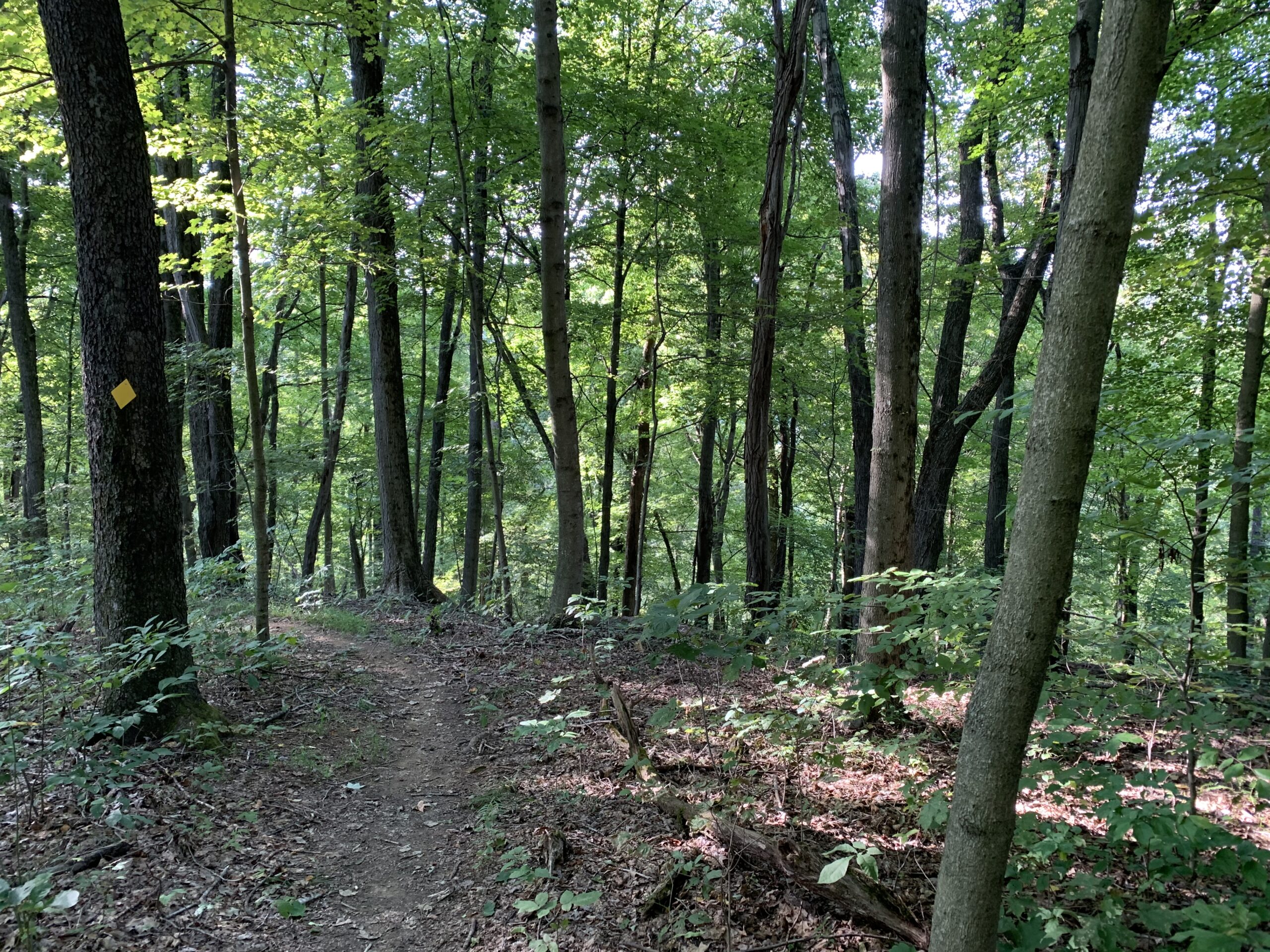
Five Overnight Backpacking Trips for Families in Ohio
It’s no secret that Central Ohio is a great place to raise a family, but you may not know that it is also a surprisingly great place for families who enjoy camping and would like to take their kids on overnight backpacking adventures. Here are some of our favorite trails and backcountry campsites.
1. Mohican-Memorial State Forest Park and Pack Sites
Mohican-Memorial State Forest is the home of one of Ohio’s most-visited parks, Mohican State Park, and a lesser-known gold mine, 10 park and pack sites located just outside the state park. The park and pack sites are clustered in three groups, each just about a mile from a parking lot, making them the perfect first backpacking trip for families with young children. Because the trails are short, you don’t need a lot of specialized backpacking gear. When we first camped here, our youngest son was three years old, and he carried his pajamas and a stuffed animal in his Paw Patrol backpack. Even though the sites are a mere thirty-minute walk or less from your car, they are completely nestled in the woods and offer peace and solitude in one of Ohio’s most beautiful forests. The sites are also linked to miles and miles of trails for families who would like to explore the waterfalls, majestic hemlocks, and deep-walled gorge found in this area.
The park and pack sites are non-reservable and are available on a first-come, first-served basis. Before parking and walking to your site, you must register at the kiosk at the front of the parking lot at the state forest headquarters. All of the sites are lovely. Sites 9 and 10 are located on the top of a ridge overlooking the Mohican River. We have camped at sites 1 and 2, which are next to Pine Run, and the kids enjoyed playing by the stream. Site 1 was the very first place we ever camped in the backcountry as a family. We cooked hotdogs over a campfire for dinner, and in the morning, we hiked out and had breakfast at Brumby’s Coffee House in Bellville on our way back to Columbus.
These sites are very popular and often fill up on the weekends, so it’s a good idea to get there early in the day. When we arrived at the registration kiosk one Friday evening this last summer, we discovered that all the sites had been taken, so we switched to plan B. We drove over to Malabar Farm State Park, which is only about 8 miles away. There is no backcountry camping at Malabar, but there is a very quiet 15-site primitive campground. We had a great campfire and enjoyed hiking through the woods the next morning.
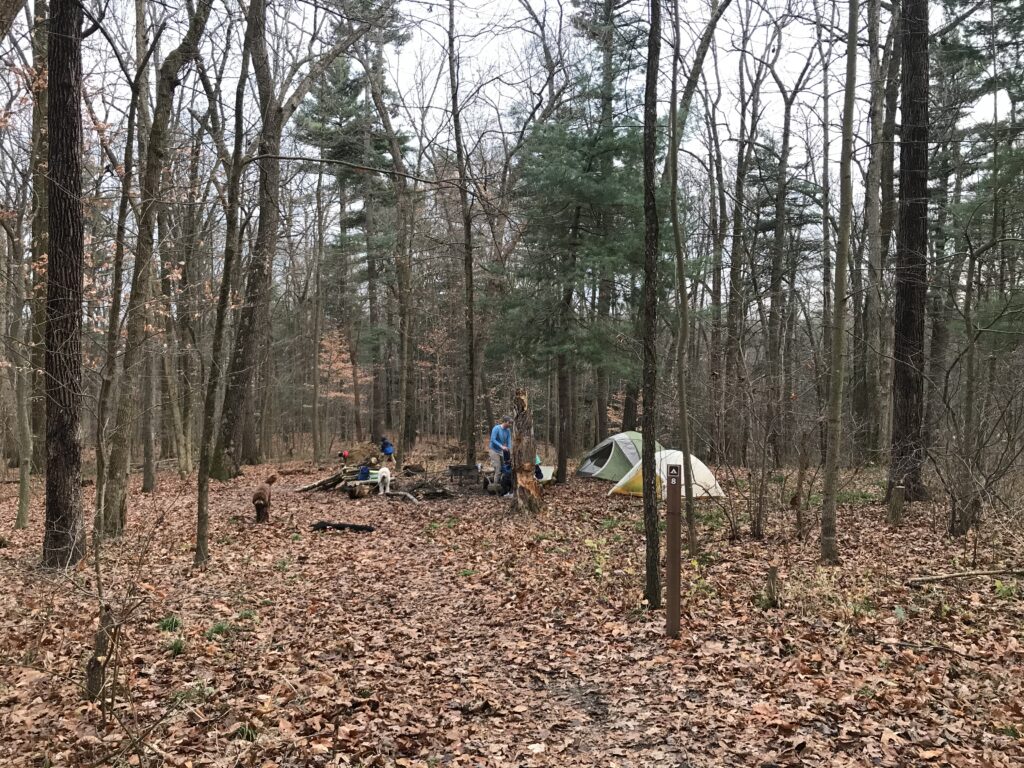
Update: We returned to Mohican on November 27. We were curious to see how many park and pack sites would be occupied this late in the year. Only sites 3 and 10 were taken, so we decided to try out site 8. The walk to site 8 is a short quarter of a mile. It’s a very woodsy site, and Luke liked it so much that he told me that he wants to camp there for his birthday (which is December 29!).
2. Zelaski Backpack Trail
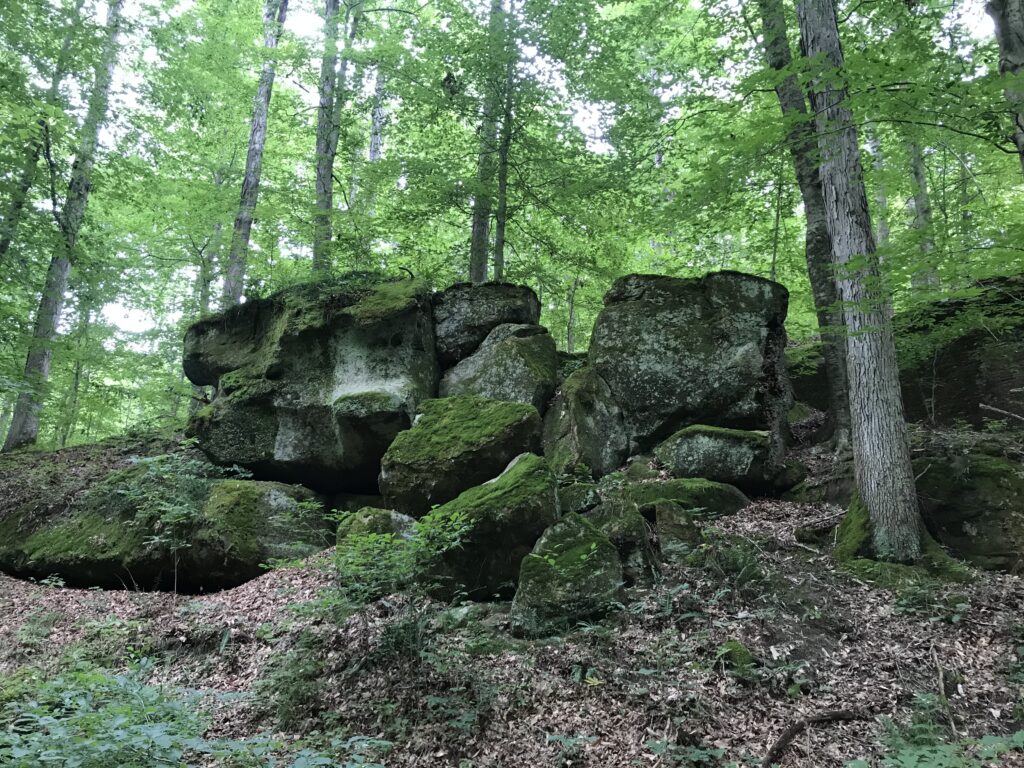
The Zelaski Backpack Trail is located next to Lake Hope State Park in Zaleski State Forest and is one of Ohio’s most popular overnight hiking destinations. Established as a backpacking park in the 1970s, the whole trail system is 29 miles long, consisting of a long main loop with a connecting trail in the middle and a northern loop. There are three designated camping areas in the park, each with a privy and supplied potable water. Although camping is only permitted at the camping areas, each area is quite large and has ten or more established camp sites with fire rings scattered throughout the woods.
There are so many ways to plan an overnight adventure at Zelaski. Campsite 1 is a perfect destination for beginning backpacking families. It is just 3 miles from the backpacking trailhead at Hope Schoolhouse and 2 miles from the day hiking trailhead on State Route 278 across from Hope Furnace. Backpackers can park at either of these trailheads. If you start from the parking lot at SR 278, you will pass Old Cemetery and Olds Hollow Cave at the beginning of your hike.
We have camped at all three sites and have hiked the middle loop and southern loop. The southern loop features ridge walking through mixed oak forest and passes a beaver pond. On a hot summer weekend we waded in the creek on the eastern side of the middle loop. We’ve also hiked parts of the rails-to-trails path in Zelaski, which is fun because it goes through the Moonville Tunnel; legend has it that the tunnel is haunted by the ghost of a brakeman who was hit by a train.
3. Wildcat Hollow Trail
The Wildcat Hollow Hiking Trail is located in southeastern Ohio midway between Athens and Zanesville in Wayne National Forest. The national forest is a patchwork of forest lands spread out over southern and southeastern Ohio in the foothills of the Appalachian Mountains. There are over 300 miles of trails in Wayne National Forest, and backcountry camping is permitted anywhere in the forest.
The Wildcat Hollow Trail offers a 17 mile loop and a shorter 5 mile loop, which is perfect for an overnight trip for families with young children who are just starting out backpacking. No one knows for sure how Wildcat Hollow got its name, but it’s fun to think that a den of wildcats once lived there. The trail features gentle hills and quiet pine plantations that break up the typical Ohio forest of beech, maple, and other deciduous trees. We backpacked here in May 2019 and saw a lot of poison ivy along the trail.
If you want to take the shorter loop and are hiking in a clockwise direction, there is a cut-off trail 2.4 miles into the hike, just before you reach an old wooden schoolhouse hidden in the trees. We loved camping in a stand of pine trees. The soft layer of needles on the ground really made the site comfy. Rather than having a campfire, we cooked our meal on our little stove. There are no reliable water sources on the trail, so it’s important to pack enough water for your hike. We brought our 13 year old labradoodle on this hike. It was her first backpacking trip, and she was totally rejuvenated by the trail.
4. Lake Vesuvius Trail
The Lake Vesuvius Recreation Area is also located in Wayne National Forest near the town of Ironton. The lake is named for the Vesuvius Furnace, which was one of 46 iron furnaces built in this part of Ohio during the nineteenth century. Lake Vesuvius is long and skinny, more like a wide river than a lake. There is an 8-mile Lakeshore Trail that hugs the edge of the lake and a 16-mile designated backpack trail. Camping is not allowed in the recreation area near the Lakeshore Trail, so backpackers are encouraged to take the designated backpacking trail. We didn’t know this when we hiked here in November 2019 and camped on a beautiful peninsula surrounded by water on three sides about two miles from the trailhead parking lot. John says we were technically far enough off the Lakeshore Trail to be in the national forest where you can camp anywhere, but it’s kind of a fuzzy line.
The Lakeshore Trail and the Backpack Trail actually start together at the trailhead kiosk and are combined for the first mile. The views of the trees and a sandstone promontory on the other side of the lake are stunning. Our plan was to camp halfway around the lake and complete the 8-mile loop the next morning, but we found a campsite we loved two miles into our hike and decided to stay there, and in the morning, we just hiked back out to our car the way we came.
5. Archer’s Fork Trail
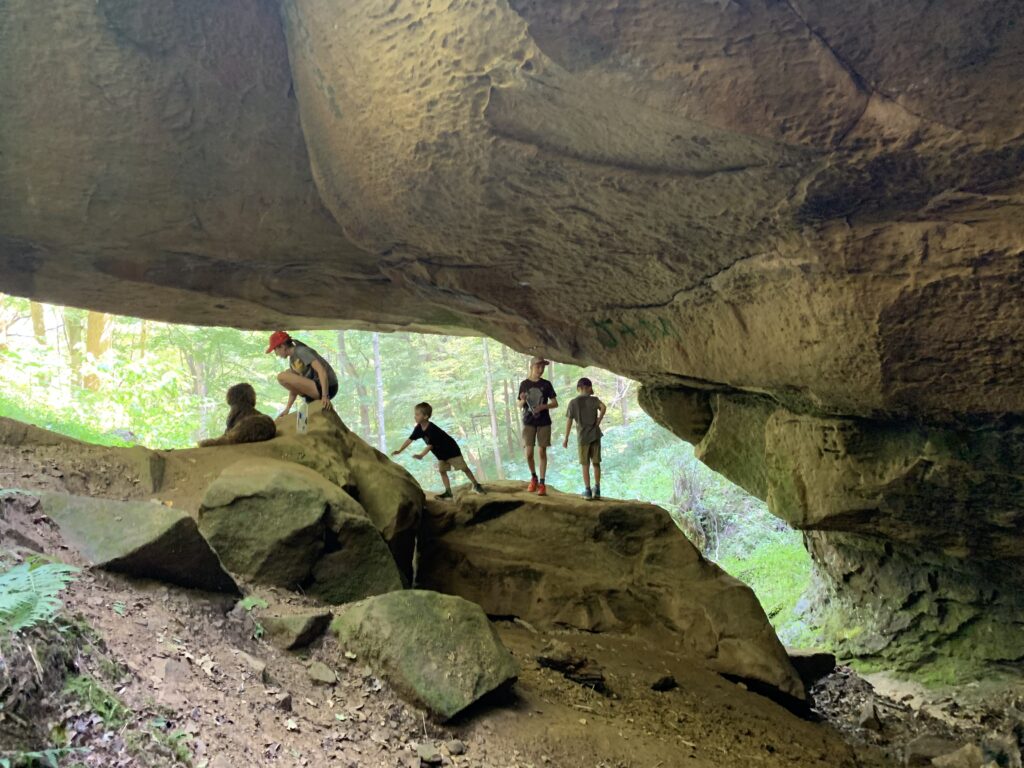
Archer’s Fork Trail is in Wayne National Forest in the far southeastern corner of Ohio, near Marietta. It is in a very remote part of the state, and we’ve seen only a few people when we have hiked here. The trailhead is down a gravel road near an old pioneer cemetery called St. Patrick’s Cemetery. The whole loop is 12 miles, and there are connecting trails if you would like to extend your trip. Highlights of the trail include the Great Cave, which is really a big rock shelter near the beginning of the hike, and the Irish Run Natural Bridge. Like most of Ohio this area has been logged many times since it was first settled, but the forest has been re-growing for at least 60 years and is home to oak, hickory, cherry, tulip, walnut, ash, sycamore and beech trees and a variety of wildlife.
When we first visited Archer’s Fork in March 2020, we started the loop counterclockwise and passed the Great Cave and Irish Run Natural Bridge early in our hike. In early spring, the hillsides are crisscrossed with streams, and we saw many wildflowers. Trillium covers the hillside by the natural bridge. When we took our backpacks off to explore the natural bridge area, my pack went tumbling down the steep slope and almost landed in the stream. After the natural bridge, the trail rises and crosses a hilltop and an old farm lane. We camped just past the lane about two miles into the trail and hiked back out the way we came in the morning.
We returned to Archer’s Fork in September 2020 to hike the whole loop. This time we walked clockwise and camped about four miles into the hike shortly after crossing Jackson Run. The kids loved scrambling over rock formations along the trail the next morning. It was a warm fall day, and we got very thirsty. Most of the streams from the spring had dried up, and we hadn’t planned to filter water on the trail, but the hike was longer than we anticipated, and we ended up collecting water dripping off the rock at the natural bridge and filtering it.
Resources for planning your adventure:
BackpackOhio.com If you consult only one source when you plan your trip, let it be this one. This site is an invaluable source of trail information and maps, which you should print out and take with you on your hike.
ohiodnr.gov Ohio Department of Natural Resources. Great information about all of the Ohio parks.
Ramey, Ralph. 50 Hikes in Ohio: Day Hikes & Backpacking Trips in the Buckeye State. 3rd ed. Woodstock: The Countryman Press, 2007. Classic hiking guide with descriptions of all five of these hikes.
https://backpackinglight.com/podcast-019-backpacking-with-children/ Expert tips for backpacking with your family.
https://www.rei.com/learn/expert-advice/backpacking-kids.html Super helpful tips from REI. This article is one in a series of articles for beginning backpacking.


